
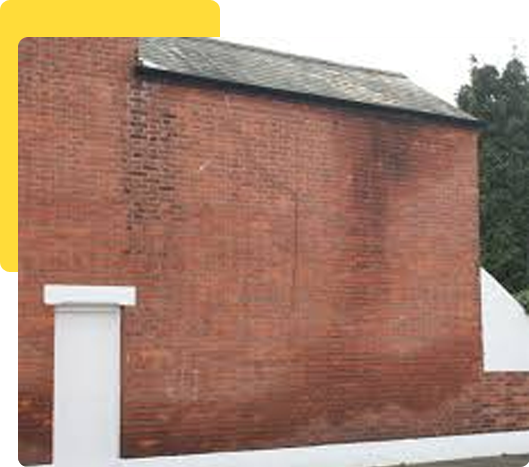
CONDENSATION DAMP
Condensation is perhaps the most common form of dampness in buildings in Hereford and it can be the most difficult to diagnose and control. Condensation dampness and subsequent issues are often underestimated and if left untreated can lead to significant dampness problems, damaged decorations, germination of unsightly mould growths, and wood-rotting fungi.
If you have any concerns about condensation dampness and black mould then your first port of call should be Hereford Damp & Mould Control as we offer a wide range of solutions for problems related to condensation
Condensation Dampness.
Why does condensation dampness happen?
Dampness in houses in Hereford is a very common occurrence and usually, there are three major causes of dampness which can are usually found.
1- Penetrating damp-due to water ingress from defective brickwork, pointing, render, or leaking/broken gutters and rainwater pipes
2- Rising dampness-moisture drawn up from the ground due to failure or lack of a damp-proof course
3- Condensation dampness
Of these, condensation dampness has the greatest potential for misdiagnosis, and subsequent inappropriate ineffective remedial work such as chemical damp-proofing and re-plastering, and as condensation can lead to ill health the understanding of the causes and cures of condensation dampness is important.
Condensation dampness is often a problem for house-owners in the Hereford and we get several calls every week which are directly related to condensation in the form of mould growth, steamy windows, and high humidity levels and we try our best to offer simple advice regarding the best way of combating condensation dampness either over the phone or carrying out a free, no-obligation condensation dampness inspection where we can advise on treatments to alleviate any condensation
There is always moisture or water vapour in the air and normally we don’t see it and often it does not cause a problem, but it is there even in the air that we breathe out, note steam breathed out on cold days etc. Air has the capacity to hold a certain amount of water vapour and this depends on a few different variables such as the room temperature and the temperature of the surrounding walls and other surfaces.
The amount of moisture in the air is usually expressed as the Relative Humidity which is the measure of how much moisture is contained in the air at a given temperature, and expressed as a ratio between the amount of moisture contained in the air and the maximum amount of moisture the air could hold if that temperature remained unchanged.
The amount of moisture that air is capable of holding will alter with the temperature, the warmer the air the more moisture it can retain. Therefore, the Relative Humidity changes not only by the amount of moisture but also by the temperature.
In practice, if moisture had been generated in a cold room such as the bathroom, and the air had reached the maximum amount of moisture that it could hold at this given temperature, the relative humidity would be 100 percent. By increasing the room temperature (without generating more moisture) the humidity would decrease (to 90% for example). This change in relative humidity would make it possible for 10% more moisture to be added, which would take the level back up to the 100%. If on the other hand the temperature was to drop to its original temperature, the moisture added would then be in excess of the 100% and would be shed as condensation.
This all sound a bit complicated but really all that is needed to combat condensation dampness is often to turn up the heating slightly and improve ventilation in any affected areas.

How this affects your house
Modern living produces a lot of moist air and this usually comes from cooking, bathing, washing, and drying clothes, apparently up to 17 liters of water can be produced daily in some homes. This is a fairly large amount and usually, it is just floating around in the air waiting to vented to the outside or if the conditions are right, to condense on walls, windows, and other surfaces. In certain areas such as bathrooms and kitchens the moist, warm air can spread to cooler parts of the house to condense on cold surfaces.
The effect of moisture generation is further aggravated by the way houses are ventilated - it is theoretically possible to avoid condensation by adequate ventilation. Up to about the late 1960s there was natural ventilation in many homes because of the lack of double-glazing, poorly fitting windows and doors, open fireplaces.
Modern living has eliminated a lot of natural ventilation by the use of double-glazing, draught excluders, fitted carpets (preventing air movement up through suspended wooden floorboards) and the removal of open fireplaces with the introduction of central heating systems. To put it simply buildings have being hermetically sealed and provide ideal conditions for condensation dampness and to occur and toxic black mould to grow.
Many houses remain unoccupied and unheated throughout the greater part of the day allowing the fabric of the building to cool down, the moisture producing activities are then concentrated into a relatively short period. This sudden increase in warm air can produce condensation as the air comes into contact with the relatively cold structure which is still warming up. High gas and electricity prices have forced many occupiers to underuse heating systems ,not heat unused rooms and seal all draughts and reduce ventilation as described previously.
The effect of this can be condensation dampness which can result in mould growth on walls and clothing, running water on windows and a general musty, unhealthy smell around the house. Condensation dampness can also produce toxic mould and has been known to cause health problems for some people. The lack of effective ventilation can also cause the buildup of VOCs ( Volatile Organic Compounds) which can have a harmful effect on asthma sufferers.
Unless you are given the right advice then you may be persuaded to have inappropriate damp-proofing or waterproofing works carried out. As well as being a waste of money and a lot of disruption most of these cures will almost certainly not work.
Treatment options for condensation dampness
There are numerous options to deal with condensation and reduce humidity levels and the most effective targeted treatment is to install passive dehumidifiers
Passive Ventilation Units
On most flats or houses which are affected by condensation we recommend the ‘Hereford Damp busters Passi Vent’ which has no running costs, has minimal heat loss and is scientifically proven to reduce condensation dampness.
The PassiVent combines a through-the-wall ‘warm’ telescopic sleeve with a slab of mineral wool inside, which is impervious to the exodus of moisture vapour whilst an internal louvered vent and an external cover simultaneously preventing cold draughts.
Each Hereford Damp busters Passivent will effectively remove water vapour from a room up to 20m2 and a typical house may need for or five Passivent units and they operate by taking advantage of the differential partial moisture vapour pressure that is normally higher inside an occupied building than on the outside. This pressure is completely independent of that in the air, for example, a typically cold misty British winter’s day may have an outside temperature of 5oC and humidity at 100% while the inside temperature is usually around 2 oC. Keeping the inside relative humidity to 70% generates a difference between inside and outside moisture vapour pressure of 8 millibars which is sufficient to alleviate condensation. All this is achieved with virtually no heat loss and the PassiVent will significantly reduce condensation dampness, steamy windows, and unsightly, unhealthy toxic black mould growth.
Building Regulations require background ventilation for habitable rooms require a vent opening with a total area of not less than 8,000mm2 and that these openings should be controllable, secure and located so to as avoid draughts. Hereford Dampbuster PassiVent vents capabilities exceed all of these requirements and are the ideal way of controlling high humidity levels, condensation dampness and toxic black mould growth in any type of property in the Hereford area.
The PassiVent operates continuously without noise 24 hours per day and can extract up to 2.3 litres (roughly one and a quarter gallons- which is ten pints) of water per day even at low pressures.
The diffusion rate of a PassiVents are slower compared with mechanical extract fans and they are not designed to cope with high amounts of water vapour produced in a short time ( i.e. in kitchens and bathrooms) and we recommend that if your kitchen or bathroom is suffering from condensation dampness that humidity controlled extract fans are fitted.
If the Relative Humidity of a room is around 70%, above which condensation dampness will occur at 20 oC, each kg of air would hold 0.0104kg of water. Local Authorities recommend a maximum velocity of 0.9m/sec through vents, this is to avoid complaints about perceived draughts from occupants, and this would remove 0.023m3 of water vapour per day. The average speed of airflow through a PassiVent is around a tenth of the maximum speed allowable but it is still able to remove 2.3 litres of water vapour per day and this greatly reduces the possibility of condensation and unsightly and toxic mould growth from occurring.

Hereford Dampbuster PassiVents are available on either a supply and fit basis or supply only for builders and DIY enthusiasts.
Supply and fit per PassiVent unit is £450.00. Supply only is £90.00 and delivery is free within Hereford and surrounding areas.
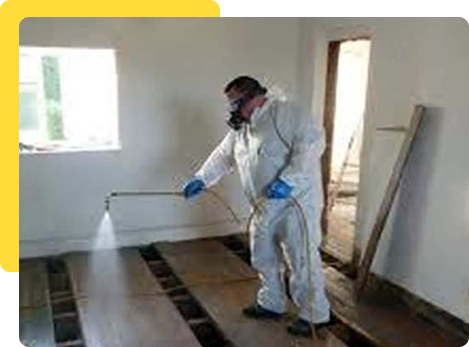
Mould removal
Black mould which may have developed in your property as a result of condensation dampness may be toxic and affected areas need to be cleaned of all this fungal growth and treated to prevent its recurrence. Walls and ceilings need to be sterilized with a fungicidal wash and then paint with an anti-mould emulsion.
These mould removal works can be undertaken by you or your decorators but if needed we offer a full mould sterilisation treatment and anti-mould painting works and on completion offer a 5-year guarantee against the recurrence of condensation or toxic black mould.
Covid 19 sterilisation
PIV units- Positive Input Ventilation
Our bestseller and what we believe to be the top product for dealing with Condensation Dampness in Cheltenham is the Lo-Carbon PoziDry Pro- a loft mounted, whole house, positive input ventilation (PIV) system
Lo-Carbon PoziDry Pro
The Lo-Carbon PoziDry Pro provides whole home ventilation using the Positive Input Ventilation principle which will reduce condensation and eradicate black mould. This form of ventilation is becoming increasingly recognised as the "best value" approach to ventilating a home. Essentially, the concept is to introduce air to the home at a continuous low rate, encouraging movement of air from inside to outside. A single unit situated in the loft space will normally be sufficient to continuously dilute, displace and replace the old contaminated air in the home with drier, tempered (by utilising otherwise unused heat in the loft space) and filtered air. The result is a significant contribution towards providing a healthy, condensation dampness free, energy efficient home. With only one electrical connection and no trickle vents normally required, the installation costs for this type of damp proofing system are generally less than for a conventional set of extract fans with trickle vents – and the entire home benefits from the ventilation provided.
Good quality loft mounted units normally incorporate a heat recovery function to introduce more heat into the home when the loft is warm during the winter months. Heat recovery functions are normally either "Fixed Temperature Heat Recovery" which adjusts the flow rate of the unit to suit the loft temperature; or "Intelligent Heat Recovery" which adjusts the flow rate to suit the loft temperature and the way the home is heated. The latter type is particularly good in terms of energy efficiency. These systems are highly effective but do require proper application and installation for optimum performance. Units incorporating low watt motor technology (Low Energy Positive Input Ventilation Units) can provide a significant net energy gain to the home. These units are therefore very energy efficient, even when compared to natural ventilation systems such as Passive Stack Ventilation.

Vent-Axia is a leader in low carbon ventilation with its innovative Lo-Carbon PoziDry PIV system which has gained prestigious accreditation from the British Board of Agrément (BBA)
A mark of quality, safety, and reliability BBA certification ultimately provides reassurance that a product is fit for its purpose. BBA certification is awarded only to products and systems that have passed a series of comprehensive assessments – including laboratory tests, on-site evaluations, quality management checks, and inspections of production. BBA certificates provide information that designers and specifiers can use to give them unbiased data on product performance, and certified products are recognised as fit for purpose by building control, government departments, and industry insurers.
Do PIV Units Work?
Because they’re so cheap to install and run, many people have doubts about the effectiveness of PIV units.
The short answer is yes. PIV units work, and their effect is transformational.
We’ve installed PIV units in homes where the owners thought they would have to leave because of continuing damp problems but after installing PIV units in their lofts condensation dampness has disappeared almost immediately, and their homes have been given a new lease of life.
Positive Input Ventilation PIV systems create airflow through positive air pressure
To understand how a PIV unit works, first you need to understand airflow and air pressure.
From global wind currents to chilly draughts in your house, air moves the same way: from areas of high air pressure to areas of low air pressure
This means that if the air pressure inside your house is lower than outside, cold air will be pulled in, while the stale, moisture-heavy air inside your house stays put.
If the moisture in your house is too high, it will collect on cold surfaces, causing condensation, damp and black mould – all of which can damage your property and also affect your health. By increasing the air pressure inside your house, air will naturally be pushed outside through existing vents and gaps around doors and windows, removing moisture and toxic allergens it contains.
This is exactly what PIV units do. By constantly ventilating your home with fresh air from your loft or outside, PIV units create positive air pressure at a fraction of the cost of a heat recovery unit or full house air conditioning.
The science is simple and the results are noticeable immediately after you switch on your PIV unit and you will notice an improvement in air quality and within days your condensation dampness will be alleviated – if not eliminated entirely.
PIV units work in both houses and flats
All we require to be able to fit a PIV unit is a wall where we can cut out a hole between your home and an air source.
The simplest way to install a PIV unit is to place it between the loft and the floor below. Air from the loft is pumped into the rest of the house to create positive air pressure, without any need to heat it.
If you do not have a loft or it has been converted, PIV units can also draw in air from outside the house. However, you may need a PIV unit which heats the air so that you’re not also cooling your house in winter months.
PIV units which heat the air have slightly higher running costs, but this is balanced by reduced heating demand as you fresh air is introduced into your house in cold weather without the need to open windows.
Call us now for the cheapest PIV installation in Cheltenham
Not only are PIV units cheap to run, they’re cheap to install as well – as long as you get us to do it. We can install your PIV unit from just £950+VAT.
Call us now or request your call back to find out more about PIV units or book your installation.
We can also provide PIV units on a supply-only basis and offer expert advice on fitting. Cost including VAT and delivery is £450
If you feel that your property is affected by condensation dampness and toxic black mould then please feel free to call us on 01242 649767 for free, impartial advice. At Cheltenham Damp & Mould Control we are happy to discuss any condensation or mould related problems that may be having an adverse effect on your house or your health and offer over-the-phone advice or arrange an inspection if required. Initial inspections are also free and we will offer you the most cost-effective and beneficial advice and solutions to your condensation dampness problems.
Our experienced property surveyors can inspect your property and specify the most appropriate condensation solutions for your problem. For more information please call us today on 01242 649767 for free advice or to book a free damp survey
Condensation Specialist Survey
There is no charge if you own the property to be surveyed and it is located within 10 miles of Cheltenham. An administration fee may apply if a written report is required (a charge may apply if the property is rented out or is situated further than 10 miles from Cheltenham )
Our qualified condensation specialists will investigate your property and identify the cause of condensation. At Cheltenham Damp & Mould Control, we only supply experienced surveyors who are highly trained in all types of damp and rot problems that could affect your property. This means that our surveyor will be able to complete the survey and give the appropriate remedial recommendations no matter what problem is identified.
Alternatively contact us through the form on the Contact Us page to request a free survey or to learn more information about our services.

